FREQUENTLY ASKED QUESTIONS : FAQs
What is Acorn-fed Ibérico Ham?
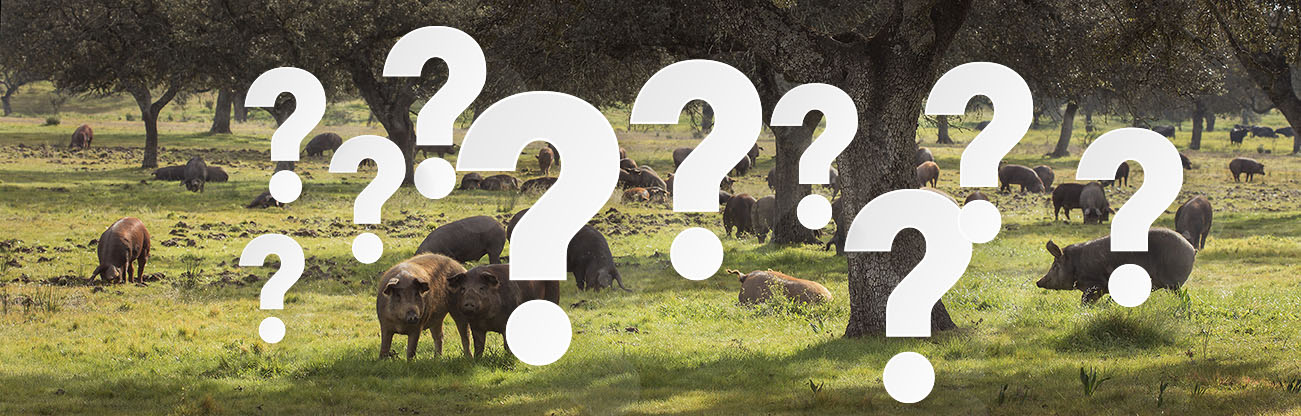
Acorn-fed Ibérico Ham comes from Ibérico pigs that complete the Montanera (acorn-finishing season), feeding on acorns and natural pastures in the Dehesa (Spanish oak pasture). In Guijuelo, this process is completed with very slow cold curing, which defines its texture and aroma. At Marcial, Montanera and time are an essential part of every piece.
What is the difference between Ibérico Ham and Serrano Ham?
The main difference lies in the flavour, due to the breed, diet and production process. Ibérico ham comes from Ibérico pigs, whereas Serrano ham is made from other white pig breeds. In the Ibérico vs Serrano comparison, Ibérico ham stands out for its marbled fat, greater aromatic complexity and longer curing periods.
How is Ibérico Ham made?
The production of Ibérico Ham combines tradition and time. After salting and resting, a long natural curing process begins. In Guijuelo, the cold, dry climate allows for slow, balanced ageing, defining the character of the ham.
How long does an unopened Ibérico Ham last?
An unopened Ibérico Ham can last for more than six months, provided it is stored correctly. For proper conservation, the whole piece should be kept in a cool, dry place, away from direct light, with no need for refrigeration.
How do you carve Ibérico Ham?
Knowing how to carve Ibérico Ham is essential to enjoy it properly. Hand-carving, in thin, small and even slices, allows the fat to melt and release its full aroma. The direction of the cut and the serving temperature are decisive. Discover it in our video.
What is Montanera?
Montanera is the final stage in the rearing of the Ibérico pig.
During this period, the animal feeds on acorns and grasses in the Dehesa, following a natural fattening process based on freedom, movement and seasonal feeding.
What is the difference between Cebo, Cebo de Campo and Bellota? (grain-fed, free range and acorn-fed)
The difference between Cebo, Cebo de Campo and Bellota depends on the animal’s diet and rearing system. This Ibérico classification distinguishes between:
- Cebo (Grain–fed) : feed-based diet on a farm.
- Cebo de campo (Free range): feed and natural resources, with animals raised in an extensive farming system.
- Bellota (Acorn -fed): free-range pigs that feed on acorns and pastures during the Montanera.
Where is Guijuelo and why is it important?
Guijuelo is located in the province of Salamanca, at more than 1,000 metres above sea level and surrounded by the Sierra de Gredos, Béjar and Francia mountain ranges. Its cold, dry climate is ideal for long, natural curing, a key factor in the ham-making tradition and in the slow development of the flavour and texture of Ibérico Ham.
What is the Guijuelo PDO (DOP)?
The Guijuelo PDO is the first designation of origin for Ibérico in Spain. It protects and certifies the origin and process of Ibérico Ham from Guijuelo, including Marcial’s hams. It guarantees controls over breed, diet, curing and quality, preserving historic know-how.
How can you identify authentic Ibérico Ham?
To identify authentic Ibérico Ham, it is essential to check the official coloured seal regulated by Ibérico standards. This seal provides information on the breed, diet and product category.
What Ibérico products does Marcial offer?
Marcial Ibérico products include ham, shoulder ham, loin and cured products such as chorizo, always selected and cured with respect for origin, tradition and time. Marcial also offers selected Ibérico meat cuts.
What does 100% Ibérico Ham mean?
A 100% Ibérico Ham comes from pigs whose two parents are certified Ibérico breed animals. This percentage guarantees maximum breed purity and a more complex sensory profile, especially in acorn-fed hams.
What role does curing time play in Ibérico Ham?
Curing time is decisive in the final result. Slow curing allows the ham to develop deep aromas, balanced texture and lingering flavour, without rushing or artificial intervention
Why does Ibérico Ham have natural marbling?
Natural marbling is the result of the Ibérico breed, its diet and exercise. During the Montanera, the pig transforms the energy from acorns into fat that becomes integrated into the muscle as it ranges freely, bringing juiciness and a rich mouthfeel.
Is Ibérico Ham healthy?
Ibérico ham can form part of a balanced diet. It is notable for its content of oleic acid, high-quality protein, iron and B-group vitamins, particularly in acorn-fed Ibérico ham.
Why is the Dehesa essential for Acorn-fed Ibérico Ham?
The Dehesa is a unique ecosystem where the Ibérico pig lives in freedom. This environment favours movement, natural feeding and animal welfare, all essential factors in the quality of Acorn-fed Ibérico Ham.
Why are some Ibérico hams more expensive than others?
The price depends on several factors: breed, diet, curing time and availability. Acorn-fed hams, with Montanera and long curing periods, require more time and resources, which is reflected in their value.
How should an Ibérico Ham be stored once opened?
Once started, the cut surface should be protected with white pork fat and food-grade cling film. It should be kept in a cool, dry place, avoiding sudden changes in temperature in order to preserve aroma and texture.
What is the best way to enjoy Ibérico Ham?
The best way to enjoy Ibérico Ham is at room temperature, hand-carved and served in thin slices. This allows its aroma, texture and the melting of the fat on the palate to be fully appreciated.
How should Ibérico meat be cooked to bring out its full flavour?
Ibérico meats reach their finest expression through simple cooking methods that respect their quality. Ideally, they should be cooked on a griddle or grill, or even in the oven, with very little seasoning, allowing the natural marbling to melt slowly. It is important not to overcook them, in order to preserve their juiciness and enhance their natural flavour.
Which Ibérico meat cuts are the most highly valued?
Although each cut has its own personality, some of the most highly valued Ibérico cuts include Secreto (thin marbled shoulder cut), Presa (premium shoulder cut), Pluma (marbled loin-end cut) and tenderloin. Each has its own characteristics: Secreto stands out for its juiciness, Presa for its distinctive texture and Pluma for its balance between meat and fat. They are highly prized in both traditional cooking and fine dining, although today every cut has found its place in contemporary cuisine.
How are Ibérico meats different from other meats?
Ibérico meats are distinguished by the pig’s breed, diet and rearing system, which give them greater juiciness, texture and a distinctive, deeper and more intense flavour.
Do you have a question you cannot find an answer to?

The personal data provided through this form will be processed by Marcial Castro, S.L., as data controller, for the purpose of managing and responding to your enquiry. The legal basis for processing your data is the consent granted when submitting the form. Your data will not be disclosed to third parties, except where legally required.
You may exercise your rights of access, rectification, erasure, restriction, objection and portability by sending a request to marcialguijuelo@marcialguijuelo.es. You can find detailed information on data protection in our Privacy Policy.